October 10, 2026
Seating Chart Strategy: Happy Guests, No Spreadsheet Drama
The seating chart has a reputation as the worst job in wedding planning, but it is mostly a sorting problem with feelings attached. A calm method turns it from a late-night argument into an hour of deliberate choices.
Wait until RSVPs are nearly closed. Seating drafts made early get rebuilt three times, and each rebuild feels worse than the last. Keep a rough list of natural groups as responses arrive — family branches, friend circles, colleagues, parents' friends — but do the real placing once the guest list is essentially final.
Confirm the physical facts first: how many tables, how many seats per table comfortably (not the maximum the venue claims), and where the head table or sweetheart table sits. Note anyone who needs step-free access, a quieter corner, or distance from speakers and toddlers before you place a single name.
Then seat people, not categories. Every table wants a social anchor — one or two guests who talk easily and will carry a table's first ten minutes. Mix one familiar cluster with a few newcomers who share something real: a city, a hobby, an age of child, a profession. Avoid the two classic errors: a "singles table" that announces itself, and scattering a shy guest alone among strangers in the name of mixing.
Handle the sensitive placements privately and early: separated parents, estranged relatives, the ex who is now a friend. You do not owe anyone an explanation of the map; you owe your guests a seat where they can relax. If two people must not meet at the bar queue all night, that is a seating fact, not gossip.
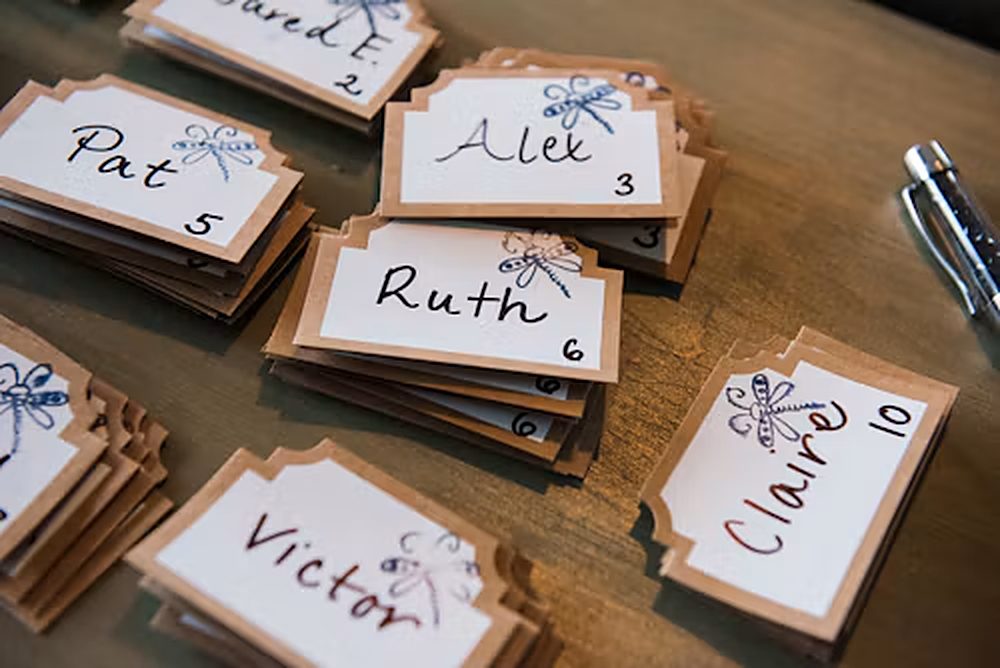
When the plan is set, produce it twice: a visual chart for setup, and an alphabetical list for whoever is placing cards. Alphabetical escort cards beat a giant chart for guests finding their seats. And keep one or two spare seats in the plan if you can — a late plus-one is much easier to absorb when the chart is a tool, not a tattoo.
A practical way to draft it
Work in pencil before you work in ink — literally or in the spreadsheet. Put each guest on a movable note, group the notes into table-sized clusters, then read each finished table as a guest: Is there someone I know? Someone I will enjoy meeting? A clear route into conversation? Couples' own seats deserve the same honesty; a sweetheart table buys you ten quiet minutes to eat and watch your favourite people in one room, while a traditional head table suits couples who want their closest friends beside them. When the draft survives a night's sleep without changes, freeze it, send the alphabetical list to your card writer or printer, and let any late change be absorbed by the spare seats you protected.
Plan it in the spreadsheet. The 10-Minute Wedding Planner tracks this for you — budget, guests, vendors, payments, checklist and the day-of timeline in one workbook.
Filed under wedding planning · More from the blog